Blog·
What is the six-foot way, and why vegetation clearance depends on it
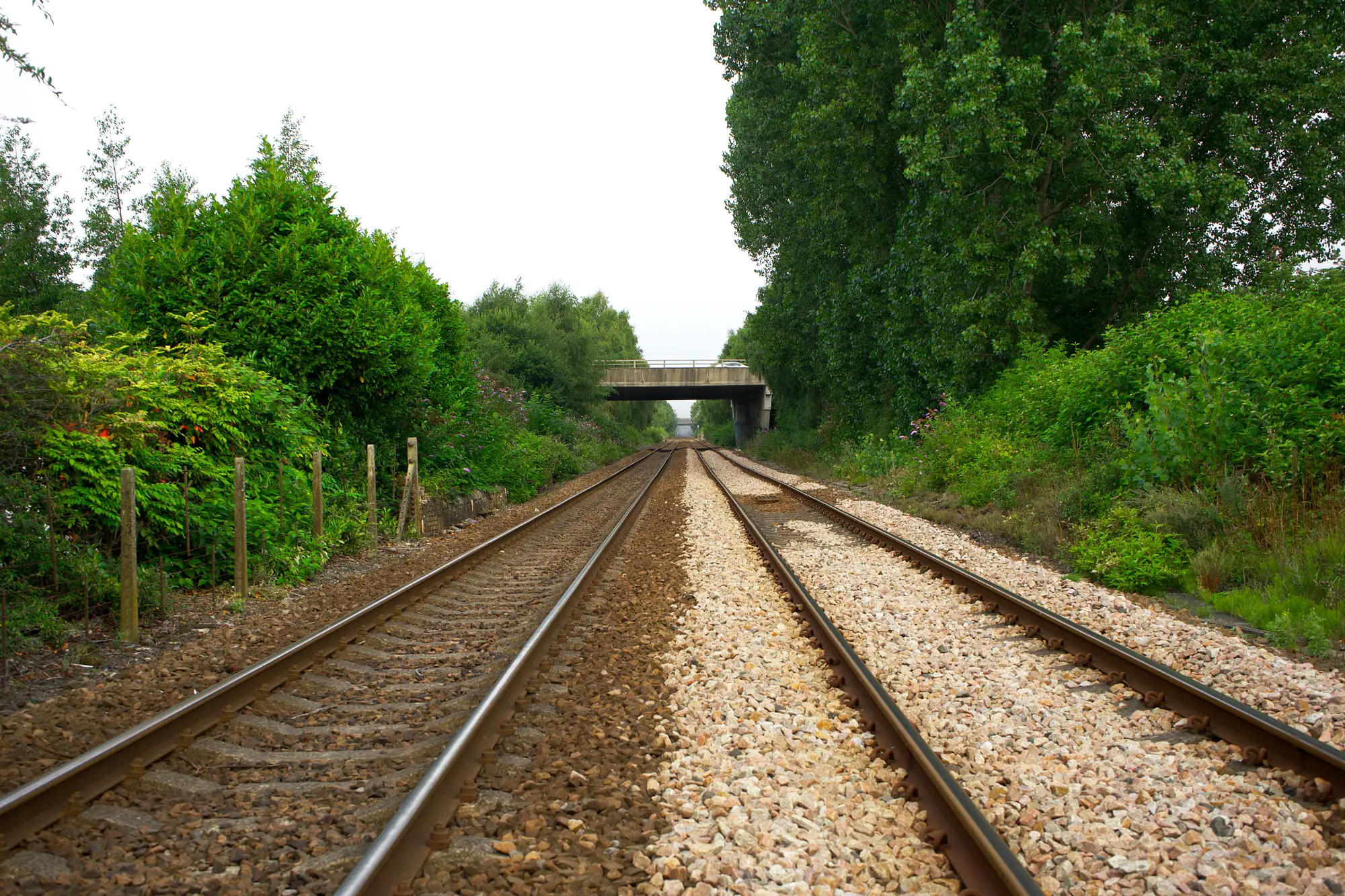
If you've worked trackside for more than a season, you've heard the term thrown around in possession briefings and vegetation surveys: the six-foot way. It sounds like a unit of measurement, and it started as one. On a standard double-track line, the six-foot way is the gap between the two running lines, the strip of ballast and cess between the "up" and "down" roads. On older UK and Irish infrastructure that gap was close to six feet (about 1.8 m), and the name stuck even as modern track centres have widened it in places.
It's a working zone, treated that way by convention rather than by any formal boundary line like a lineside fence. Track workers stand there when a train passes on the adjacent line, cable troughing often runs through it, and vegetation growing up from the ballast shoulder shows up there first, before it ever reaches the lineside fence.
Why encroachment starts here, not at the fence line
Most vegetation surveys get scoped around the obvious boundary: the fence, the cutting top, the embankment toe. But growth doesn't wait for a boundary to show up on a plan. Seedlings root in ballast shoulders and cess drains, and because the six-foot way gets less foot traffic and less routine disturbance than the cess on the outer edge of each track, scrub can establish there for a season or two before anyone walking the line notices it from ground level.
By the time it's visible from a cab window, it's often already tall enough to matter. Buddleia, bramble, and self-seeded ash are the usual offenders, and they don't grow in straight lines that match a maintenance schedule. A six-foot way that was clear last spring can have a metre of growth by late summer, especially on sections with less ballast depth or poor drainage where moisture collects.
Sighting distance is where it actually costs you
The reason infrastructure managers care about the six-foot way specifically, rather than lineside vegetation generally, comes down to sighting distance. A signal sighting assessment assumes a driver's eye line from the cab, and on curved track or at junctions, that eye line often crosses the six-foot way before it reaches the signal post. Growth in that gap doesn't need to be tall. It needs to be tall enough, at the wrong point along the approach, to clip the sighting distance a signaller or driver relies on.
This is also the zone that gets missed in a lot of walked inspections. Track workers focus on ballast condition and running rail condition, which is the right priority for a walked inspection, and sightlines to the next signal rarely get measured as part of that same walk. A clearance team can walk past a six-foot encroachment a dozen times without anyone logging it as a sighting-distance issue until a formal assessment flags it, usually after a near-miss report or a routine signal sighting review.
What this means for a clearance programme
Treating the six-foot way as part of the standard trackside vegetation clearance zone from the start changes how a survey gets scoped. It means checking growth height against the specific approach to each signal, using the sighting distance for that signal as the benchmark rather than a single blanket clearance width across the whole corridor. And it means re-checking it on a cadence that matches how fast things actually grow there, not just when the lineside contractor happens to be mobilised for fence-to-fence clearance.
That's the gap Rail Vegetation Monitoring is built to close: a yearly pass across the corridor using RGB and near-infrared imagery that locates encroachment, including growth in the six-foot way, and checks it against sighting distance for every signal on the line, handed over as a table your vegetation-management contractor can work from directly.
If the six-foot way on your corridor hasn't been checked against signal sighting distance in the last year, it's worth putting on the list before the next survey round.