Blog·
Structure gauge vs. vegetation clearance: what's the difference?
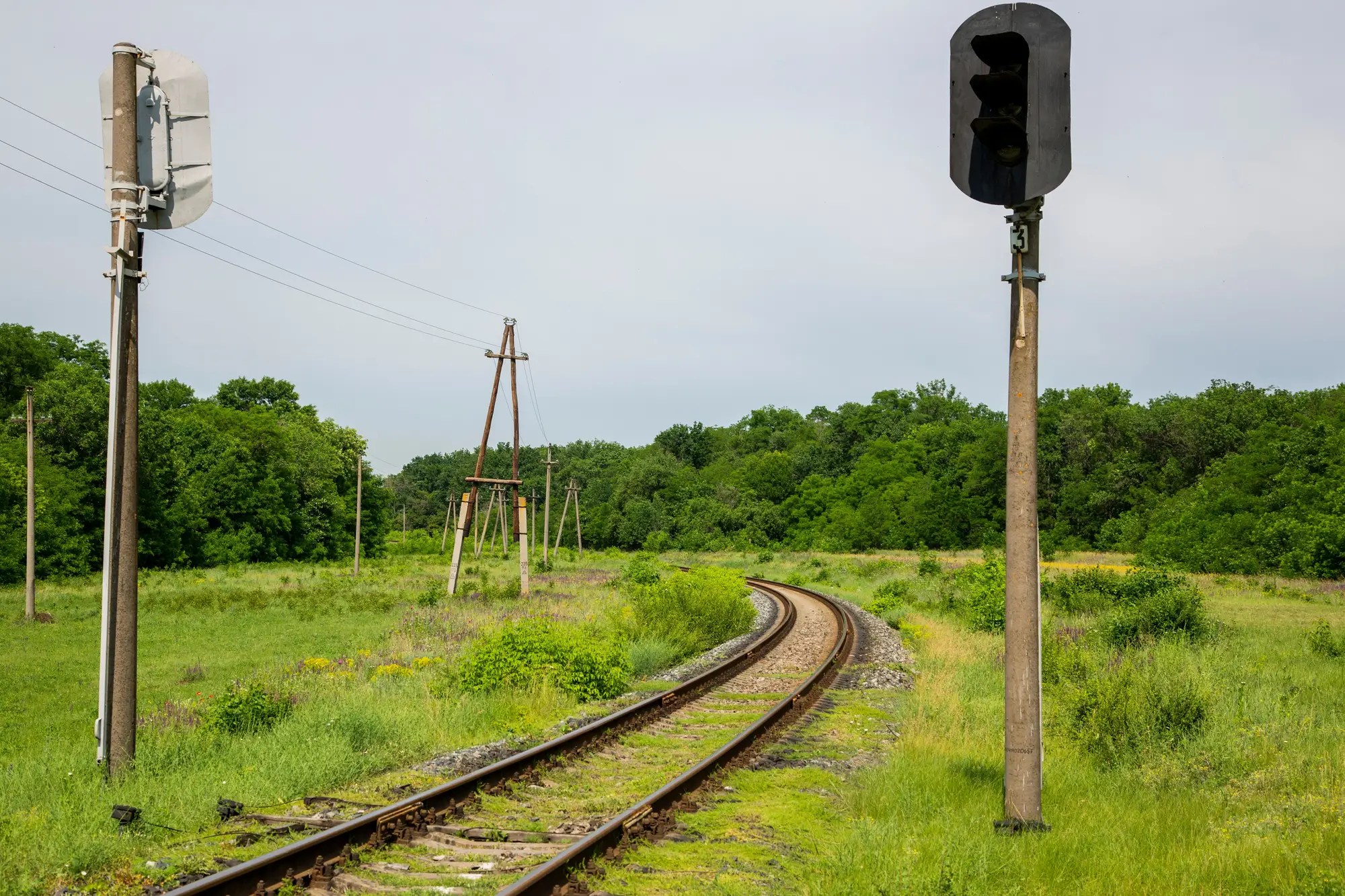
Ask three people on a rail corridor to define "clearance" and you'll get three different answers. Some mean the structure gauge, the fixed envelope around the track that keeps bridges, platforms, and signal gantries from fouling rolling stock. Others mean the vegetation clearance envelope, the zone that has to stay free of branches, scrub, and leaf litter. They overlap in places and get used interchangeably in meetings, which causes real problems when someone assumes a structure gauge survey from five years ago also covers this season's vegetation growth.
It doesn't. They're answering two different questions, checked on two different schedules, by two different disciplines.
Structure gauge: a fixed envelope for fixed things
Structure gauge (sometimes called the kinematic envelope or gauging clearance, depending on which standard you're working to) defines the minimum space around the track that permanent structures must not enter. Bridges, platform edges, tunnel linings, overhead line equipment, signal posts, lineside cabinets: all of it gets checked against this envelope at design stage and whenever new infrastructure goes in near the running line.
The key thing about structure gauge is that it doesn't move. A platform built to clear a diesel multiple unit in 1987 still clears it today, barring subsidence or a change in rolling stock dimensions. Once a structure passes gauging, it stays passed until something physically changes, either the structure itself or the vehicles running over the track. That's why structure gauge surveys happen at commissioning and after any infrastructure works, not on a recurring annual cycle.
Vegetation clearance: a dynamic, living hazard
Vegetation clearance envelopes exist for different reasons entirely, and the thing inside them grows. A sapling that's two meters off the rail in spring can be well inside the lineside clearance standard by autumn. A stand of self-seeded ash doesn't stay where a survey last found it, unlike a bridge abutment.
This is also where the list of hazards gets longer than "something might hit a train." Encroaching vegetation drops leaves onto the rail head and causes adhesion problems in the braking zone. Overhanging branches shed limbs onto the wires or the formation during storms. Root growth can affect drainage and ballast condition near the track. None of that is a structure gauge issue. All of it falls under vegetation management, which is why most networks run vegetation clearance checks annually rather than treating a single survey as permanent.
Why sighting distance adds a third line item
There's a third category that often gets lumped in with vegetation clearance but deserves its own line in any report: signal sighting distance. A tree can sit well outside the physical clearance envelope and still block a driver's view of a signal at the distance required for braking. That's a sighting problem, specific to each signal's location and the approach speed on that stretch of line.
A vegetation survey that only measures distance-to-track and ignores line-of-sight to signals is missing half the compliance picture. The two checks use different criteria: one measures a gap, the other measures a sightline from a fixed observation point (the driver's eye height, at a given distance back from the signal) through whatever's growing in between.
Keeping these three things separate, structure gauge, vegetation clearance envelope, and signal sighting distance, matters when you're building a maintenance program or justifying a clearance order to a contractor. A fixed-structure gauging certificate from last year tells you nothing about whether a signal twelve kilometers down the line has been swallowed by a growth spurt in the past eight months. Only a current vegetation survey answers that.
That's the gap Rail Vegetation Monitoring is built to close: an annual pass over the corridor that flags encroachment by location and type, and checks sighting distance to every signal, delivered as a table ready to hand to whoever's doing the cutting. If your last vegetation check predates this growing season, it's worth finding out what's changed.