Blog·
What is low adhesion season, and why lineside vegetation drives it
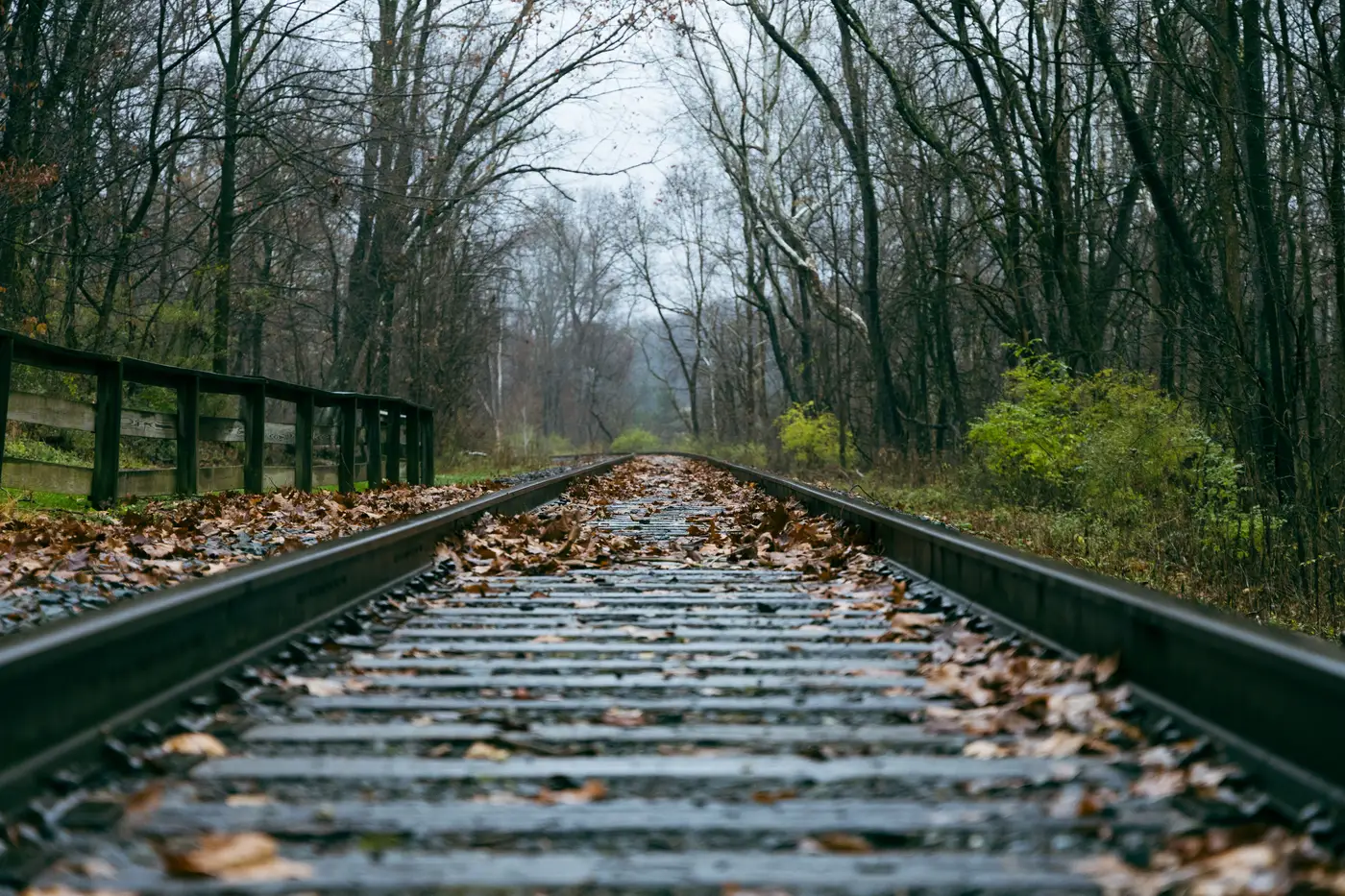
Every autumn, timetables get padded, braking distances get longer, and somewhere a train overshoots a platform because the rail just wouldn't grip. Operations crews call this low adhesion season. It has a cause, and that cause is mostly standing at lineside right now, waiting to drop its leaves on your track.
What low adhesion actually is
Adhesion is the friction between wheel and rail that lets a train accelerate, brake, and hold its line on a curve. On a clean, dry rail that friction is high and predictable. Add a thin film of contamination and it drops hard, sometimes to a fraction of normal.
The driver asks for a brake application and gets wheel slide instead of deceleration. On the way out of a station, wheels spin instead of gripping. Neither is a dramatic failure. Both quietly eat into margins that were sized for a clean rail, which is why low adhesion season shows up in the timetable as padded running times and in the safety reports as a spike in signals passed at danger.
Leaf fall and railhead contamination
The mechanism is mundane. Leaves fall onto the running line, a train passes over them, and the wheel crushes and heats the leaf material against the rail head. That process bonds a thin, black, slippery film of leaf mulch and iron oxide to the steel. It's called the "black layer" by people who've had to scrape it off, and it doesn't wash off in the rain the way loose debris does. It builds through a wet autumn and can persist on lightly used lines for weeks.
The species matter more than people expect. Broad-leaved trees close to the boundary, particularly sycamore, oak, and ash, shed heavily and in volume over a short window. A single mature tree overhanging the cess can contaminate hundreds of metres of running line in one wet week. Conifers and low scrub contribute far less. If your low adhesion complaints cluster at the same mileposts every year, there's usually a specific stand of trees upstream of that location.
Why vegetation management is the actual lever
Railhead treatment trains, sandite, and traction gel treat the rail after the contamination has already bonded to it. Keeping leaf-bearing canopy off the running line is a vegetation clearance decision. It depends on knowing which trees within falling distance of the track are broad-leaved, how close they sit to the rail, and which ones have grown past the clearance envelope since last year's survey.
A stand dense enough to shed leaf litter onto the ballast can also be the stand that's grown into the sightline to a signal further down the same curve. A clearance programme tracking sighting distance alone will miss that stand's leaf-fall risk, and one tracking leaf fall alone will miss the sightline it's blocking. The annual encroachment survey behind Rail Vegetation Monitoring covers both in the same pass: distance from each stand to the running line, and sighting distance to every signal along the corridor, in a table a contractor can act on before the leaves start falling.
If this is the season you'd like to see where that encroachment sits on your corridor before autumn catches you out, Rail Vegetation Monitoring is built for exactly that handoff.