Blog·
What counts as the lineside boundary on a railway?
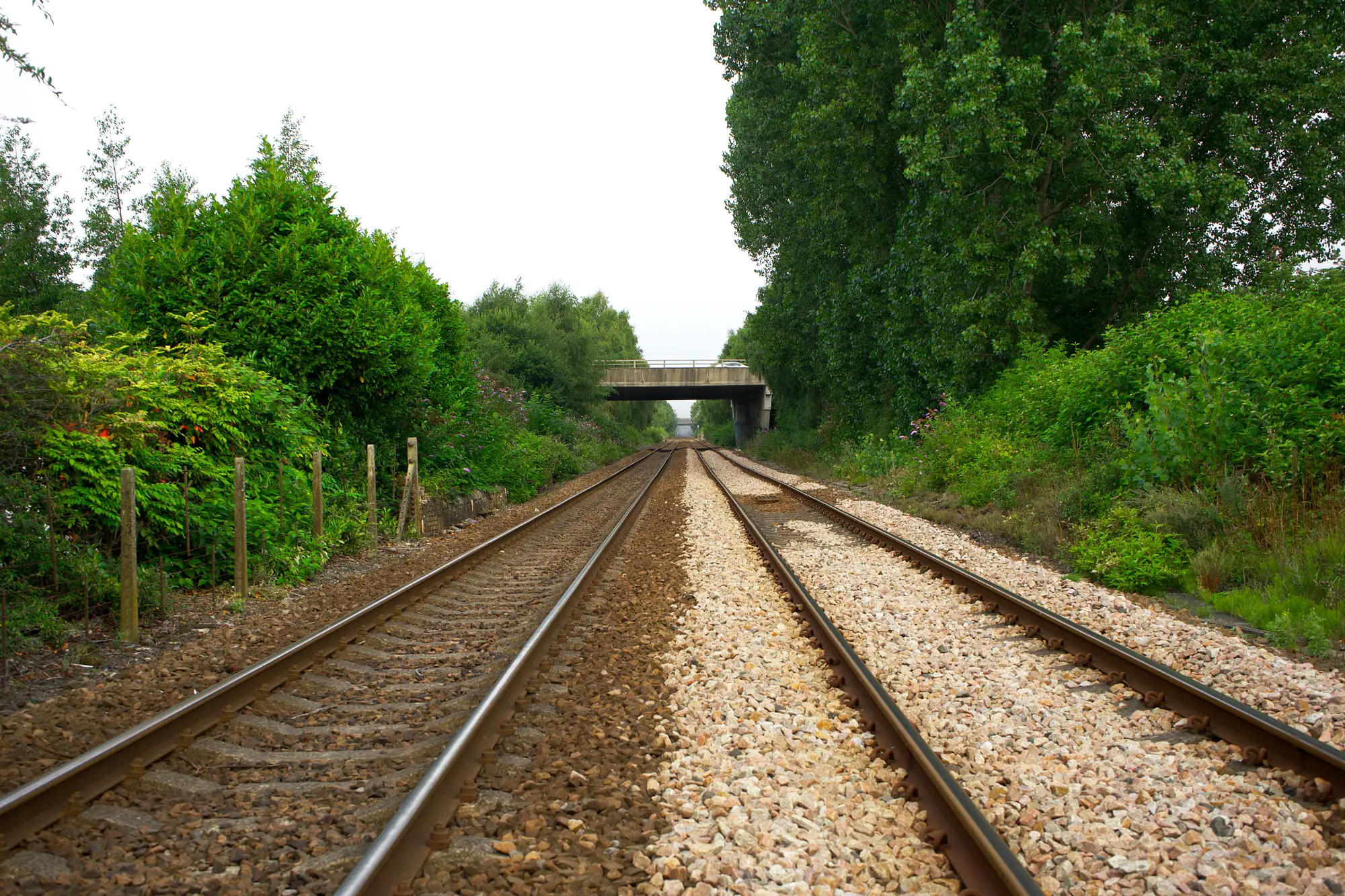
Ask five people where the lineside boundary sits and you'll get five different answers: a finger pointed at a fence post leaning three different directions, a hedge line that's crept into the cess since anyone last checked, a ditch nobody's sure is drainage or demarcation. That vagueness causes real problems once vegetation gets involved, because clearance responsibility, signal sighting checks, and any notice served on a neighbouring landowner all hinge on exactly where the boundary runs.
The legal line versus the fence on the ground
The lineside boundary is the legal edge of railway land, the point where the infrastructure owner's title stops and the adjoining property starts. In most cases that line was fixed decades ago, often at original construction of the route, and it's recorded in conveyancing plans rather than anything visible from the cess. What you see walking the line, a post-and-wire fence, a stone wall, a hawthorn hedge, is meant to mark that legal boundary but frequently doesn't sit exactly on it. Fences get replaced slightly off-line after storm damage. Hedges planted along a boundary fifty years ago have since spread a meter or two onto railway land, or the other way onto the neighbour's field, and nobody moved the fence to match.
A stand of self-seeded ash or a bramble thicket that reads as lineside growth often sits inside the farmer's title next door rather than the railway's. The reverse happens too: growth that looks like it belongs to the neighbour sometimes sits inside the railway's boundary instead. Where there's no fence left at all, which happens more often than you'd expect on older sections of route, the title plan settles the question.
Who's responsible for cutting what
As a general rule, the infrastructure owner maintains the boundary fence itself and manages vegetation on the railway side of it, regardless of who planted it or how long it's been growing. Vegetation on the far side of a sound boundary fence is the adjoining landowner's job, though it still affects the railway. A tree rooted in a neighbour's field can still grow over the fence, overhang the cess, or screen a signal from the cab, and encroachment like that usually means a formal notice to the landowner rather than a direct cut by a rail contractor.
Where boundary ownership is disputed or simply unknown, the safe working rule for a vegetation programme is to treat anything growing into the operational envelope, meaning within reach of the track, the OLE, or a signal's sightline, as something that needs addressing regardless of which side of an uncertain line it started on. Sort the recharge-the-landowner paperwork afterward if the growth turns out to have started on adjoining land. Getting boundary attribution right matters for billing a third party or serving a notice properly. It doesn't excuse leaving an encroachment, or a sighting problem, unflagged while someone digs out a 1962 conveyance plan.
Why this matters for sighting distance
Signal sighting compliance doesn't care which side of a fence a branch grew from. A driver either has clear sight of a signal at the required distance or doesn't, and vegetation that's crept in from adjoining land closes that distance just as effectively as anything rooted inside the boundary. That's one reason boundary disputes shouldn't be allowed to stall a sighting check: log the obstruction, note which signal it affects and roughly how much the sighting distance is reduced, then run the ownership question separately instead of letting it hold up the fix.
A once-a-year survey of the corridor, covering growth up to the boundary and anything beyond it close enough to matter, is what Rail Vegetation Monitoring is built to produce: a location, the encroachment type, distance to track, and any signal flagged for reduced sighting distance, handed over as a table your vegetation contractor can work from without you walking every chain of fence line first.
If your boundary records are as patchy as most routes', get in touch about what a corridor-wide survey would look like for your section.