Blog·
How often should a rail corridor be walked for vegetation growth?
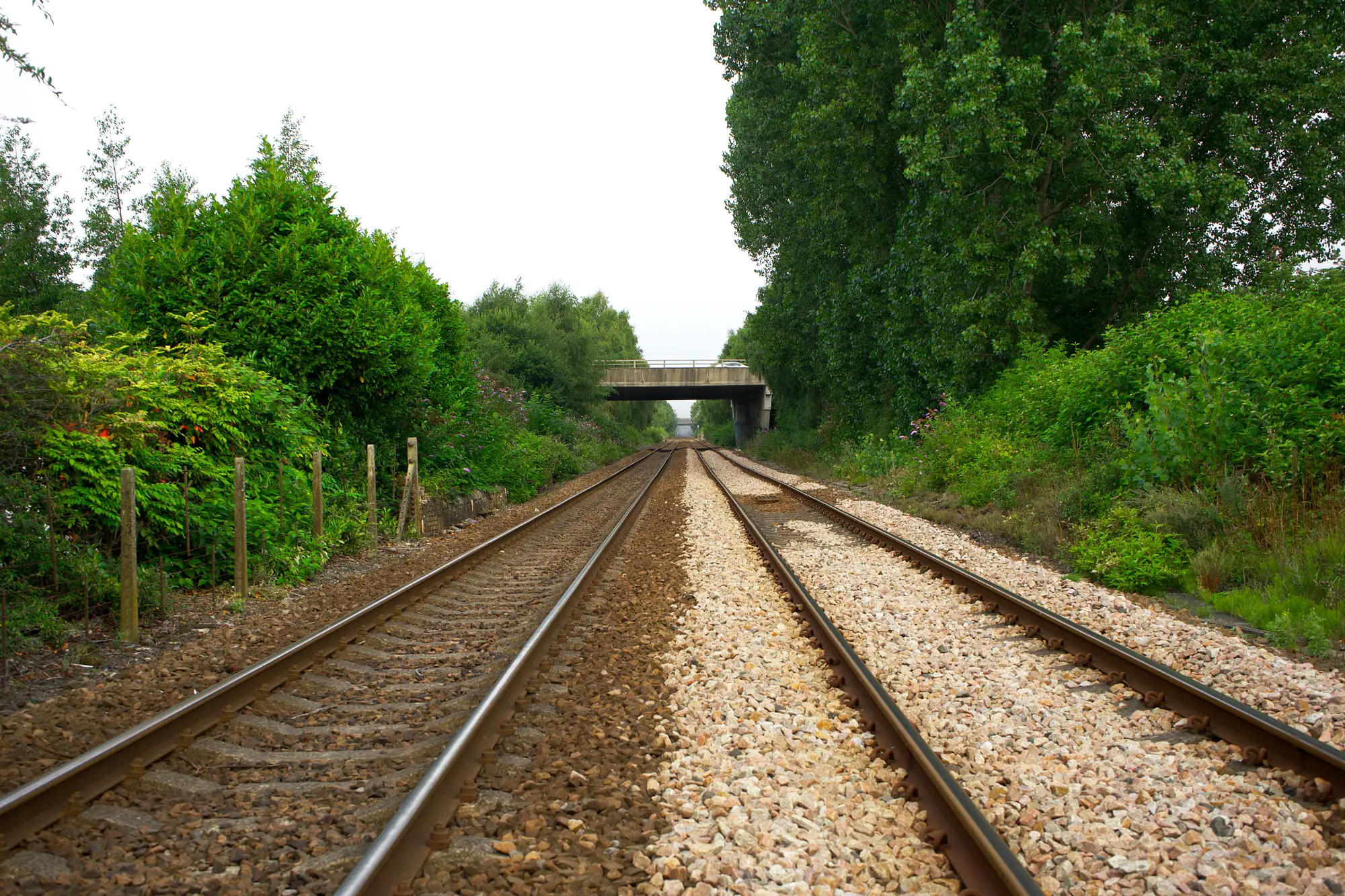
Most track walking inspection cadence decisions come down to whoever last got a near-miss report or a complaint about a signal being hard to spot. There's no single number that fits every corridor. Growth rate, climate, soil type, and how aggressively the last clearance cycle cut things back all push the answer in different directions.
That said, here's roughly how it plays out for most infrastructure managers running a foot-patrol program.
What a typical walking cadence looks like
A corridor through fast-growing scrub or bottomland hardwood in a warm, wet region often gets walked quarterly during the growing season, sometimes monthly on known problem stretches. Drier corridors with slower-growing brush might only need a full walk twice a year, with a targeted check after storms or heavy rain, since that's when root-heaved trees and wind-snapped limbs tend to show up near the ballast.
Some operations also build cadence around the clearance contract rather than the growth itself. If the vegetation-management crew is scheduled for spring and fall cuts, the walk happens a few weeks ahead of each cut to build the work order, then again after to confirm the cut actually got done to spec.
None of this is written down anywhere as a universal rule. It's local knowledge, built up by whoever has walked that section for a few seasons and knows which mile markers always grow back fast.
Where walking cadence runs into trouble
Foot patrol is good at catching what's right in front of the walker: a sapling pushing into the clearance envelope, brush crowding the ballast shoulder, a limb hanging low over the rail. It's much worse at catching something at a distance, because distance is exactly what a signal sighting-distance problem is about.
A tree that's 150 meters down the line from a signal and growing at an angle doesn't look like a problem when you're standing next to it. It only becomes a problem when you're standing where the train operator needs to see the signal from, which the walking patrol usually isn't doing for every signal on every walk. Sighting-distance checks get done less often than general vegetation checks, often only when something's already been flagged or after an incident review, which means the gap between a tree starting to lean into sightline and someone noticing it can run a full growing season or more.
The other gap is coverage. A corridor walk covers the ground the walker physically travels, at the pace they travel it. Dense sections, overgrown culverts, and vegetation just off the ballast on a curve are easy to under-inspect, because the walker is focused on footing, equipment, and the next ten miles of track.
Where an annual imagery pass fits
An annual imagery-based review sits alongside the walk and closes that specific gap. Rail Vegetation Monitoring reads RGB and near-infrared imagery across the corridor once a year at a resolution fine enough to spot individual encroaching trees and brush lines, and checks the line of sight to every signal from the imagery rather than from a person's position on the ground. You get a table back: the location, what kind of encroachment it is, distance to track, and which signals have reduced sighting distance, ready to hand straight to the vegetation-management contractor as a work order.
It won't tell you about a storm-felled limb from last Tuesday. That's still a walking-patrol job. What it does is catch the slow stuff, the tree that's been creeping toward a sightline for two growing seasons without anyone standing in the right spot to notice, on a fixed yearly schedule that doesn't depend on which mile markers the walker remembers to watch closely.
If your walking cadence is solid for general clearance but signal sighting distance keeps slipping through, it's worth seeing how the annual corridor review works for the sections it's built to cover.